
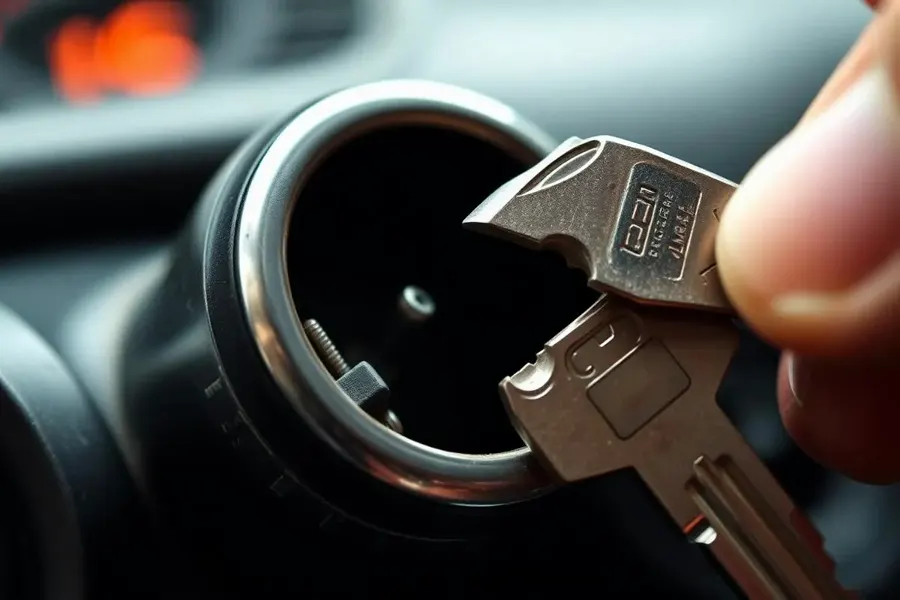
Why car keys snap in the first place
Keys almost never break because of one bad turn. They break from metal fatigue that builds over years. Every time you twist a key that is slightly bent, use it to open a package, or carry it on a heavy keychain that swings from the ignition, you are adding microscopic stress to the blade. One day, an ordinary turn crosses the line and the metal lets go.
The second common cause is a worn or dirty lock cylinder. When wafers inside the cylinder stop moving freely, the force you apply to the key goes up dramatically — and the key, not the cylinder, is the part designed to fail first. If your key has been sticking, grinding or needing a jiggle for months, a breakage is not bad luck; it is the predictable end of the story.
First steps the moment the key breaks
Stop. Do not turn anything, and do not insert the other half of the key to 'finish the turn.' Whatever position the lock was in when the key snapped, leave it exactly there. If the engine is running, let it run unless it is unsafe — a running car with a broken key is far easier to deal with than a locked steering column.
Look at how much of the fragment is visible. If even two or three millimetres of the blade protrudes from the cylinder, there is a good chance of a quick extraction. If the break is flush with the lock face or deeper, put the tools down — this is now a professional job with professional extractors.
What never to do
Never use superglue on the other half of the key. This is the single most common DIY disaster we see across Austin, TX: glue wicks into the cylinder, bonds the wafers solid, and converts a 20-minute extraction into a full cylinder replacement. The same goes for epoxy, hot glue and tape — none of them can grip a fragment against the spring tension of the wafers.
Never probe the cylinder with a screwdriver, drill bit or wire coat hanger. You will not reach the fragment; you will mangle the wafers, and a repairable cylinder becomes scrap. And never spray WD-40 or graphite into the lock in a panic — flooded lubricant makes extractor tools slip and glues debris to the fragment.
A safe DIY attempt — only if the fragment protrudes
If a visible stub is sticking out, needle-nose pliers or strong tweezers can sometimes grip it. Pull straight out along the keyway — not at an angle — with steady, gentle pressure. A thin jigsaw blade slid alongside the fragment, teeth facing the key, can hook it from behind, but stop immediately if you feel resistance or the fragment moves deeper.
If two or three careful attempts do not bring the piece out, stop. Every additional attempt pushes the fragment further in or damages the cylinder, and both outcomes cost more than the service call you were trying to avoid.
How a locksmith extracts a broken key
Professional extraction uses purpose-built tools: spiral and hook extractors that slide down the keyway alongside the fragment and catch the blade's cuts. For a straightforward door or ignition break, the whole job typically takes 15 to 25 minutes at your location — no tow, no dealership, no drilled lock.
After the fragment is out, a good locksmith does two more things: inspects the cylinder for the wear or debris that caused the break, and cuts you a new key from the two broken halves or from the vehicle's key code. If the cylinder is damaged, you will be told honestly whether it needs a rebuild or replacement before any further work happens.
Broken in the ignition versus broken in the door
Door lock breaks are usually simpler: the cylinder is accessible and the car can still be driven if you have another way in. Ignition breaks are more delicate because the cylinder interfaces with the steering lock and, on many vehicles, the immobiliser antenna ring. Forcing an ignition extraction can damage parts that cost ten times the service fee.
Either way, the outcome is the same when handled properly: fragment out, new key cut, cylinder checked — usually in a single visit to your driveway, office car park or roadside anywhere in Greater Austin, TX.
How to prevent the next break
If your key has been sticking, fix the cause now rather than after the snap. A cylinder service or a fresh key cut to factory code is a modest, scheduled expense. A broken-key emergency at 11pm in a storm is neither modest nor scheduled.
Lighten your keychain — heavy fobs and charm collections lever the blade every time you hit a pothole on I-35. Replace visibly worn or bent keys before they fail, and keep a spare key somewhere safe so a broken key is an inconvenience rather than a lockout.
Key snapped in the ignition or door? Our mobile locksmiths extract fragments, cut new keys and service worn cylinders at your location, 24/7 across Greater Austin.
Broken key extraction in Austin, TX