
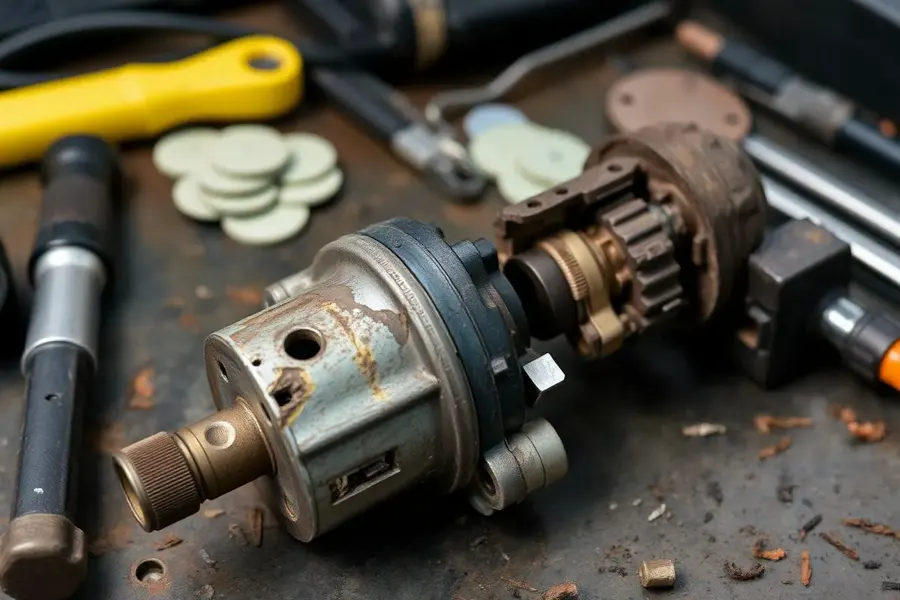
1. The key needs jiggling to turn
This is the earliest and most reliable warning. Brass wafers inside the cylinder wear against the steel key until alignment becomes marginal. Wiggling temporarily nudges them into position. It will not get better on its own.
2. The key is hard to insert or remove
Debris, a bent key or a failing spring pack all present this way. Before assuming the worst, try your spare key: if the spare slides in cleanly, the problem is a worn key rather than the cylinder, and a fresh key cut to factory code solves it for a fraction of the cost.
3. The car stalls or loses accessory power while driving
This one is a safety issue, not an inconvenience. A worn cylinder can slip back from run to accessory over a bump, killing power steering and power brakes at speed. Get it inspected immediately.
4. The dashboard security light stays on
A persistent immobiliser light usually means the transponder ring around the ignition is not reading the chip cleanly. That may be the ring, the key, or a cylinder that has shifted the key out of the antenna's range.
5. The key turns but nothing happens
If the cylinder turns freely with no crank and no dash lights, the electrical switch behind the cylinder has likely failed. That is a different component and a different repair — which is exactly why diagnosis before parts matters.
What it costs to act early
A cylinder rebuild in your driveway generally runs from $129 and keeps your existing key. A full replacement after a seizure runs from $199 and sometimes involves a tow. Acting at the sticky stage is the cheapest decision you will make all year.